pSEO Engine.
A programmatic-SEO engine that ships static editions, ranks them, and ports the pattern to any vertical -- proved end-to-end on myphotoai.alkenacode.dev and agents.alkenacode.dev.
The problem on file
Most engineers wait for recruiters to find a PDF resume. The pSEO engine is the inversion of that loop: every system the studio ships also ships static HTML editions, archive pages, structured data, sitemap entries, and IndexNow pings, so the work itself becomes the lead-gen layer. The engine is the same across deployments; the slug strategy and the templates change per vertical.
This dispatch documents the engine. The two live deployments below are the evidence.
What it is, in numbers
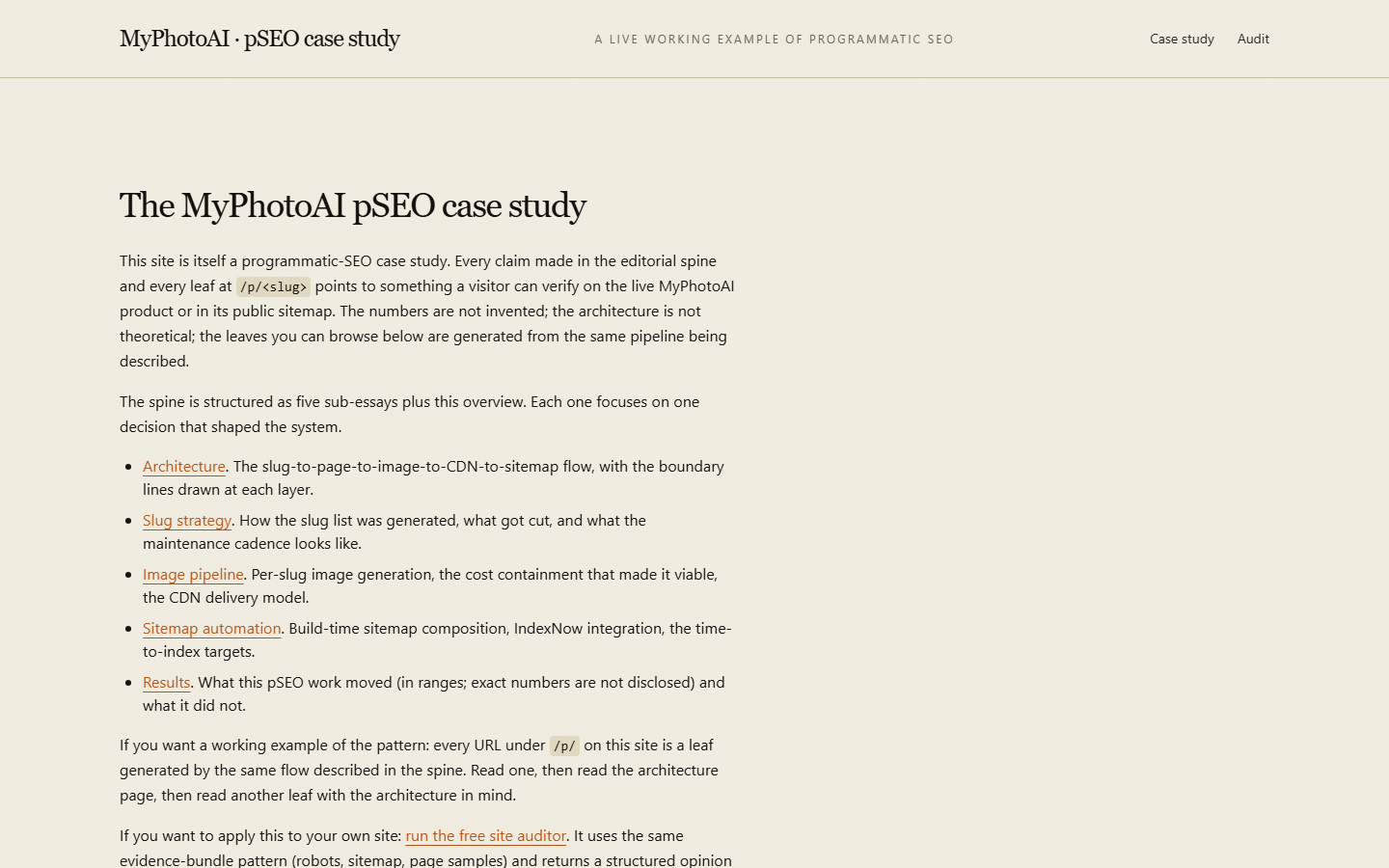
The marquee piece, the publish loop
Every system the engine touches has the same publish loop, regardless of vertical. The vertical-specific bits are isolated to the slug strategy and the Handlebars template; the rest of the loop is shared infrastructure that publishes, validates, pings, and traces.
async function publishEdition(input: EditionInput) {
const slugs = slugStrategy(input);                 // per-vertical
const html  = renderTemplate(input, slugs);        // per-vertical
await writeStaticEditions(slugs, html);            // shared
await rebuildSitemap({ stripEmpty: true, stripErrorAi: true });
await pingIndexNow(slugs.map(slugToUrl));
await tracePublish(input.id, slugs, Date.now());
return slugs;
}The sitemap-integrity step is the load-bearing piece. Empty slugs, AI-error artefacts, and spam slugs are stripped before the sitemap is published, so a broken run never leaks into Google's view of the site.
The second instance, the same engine
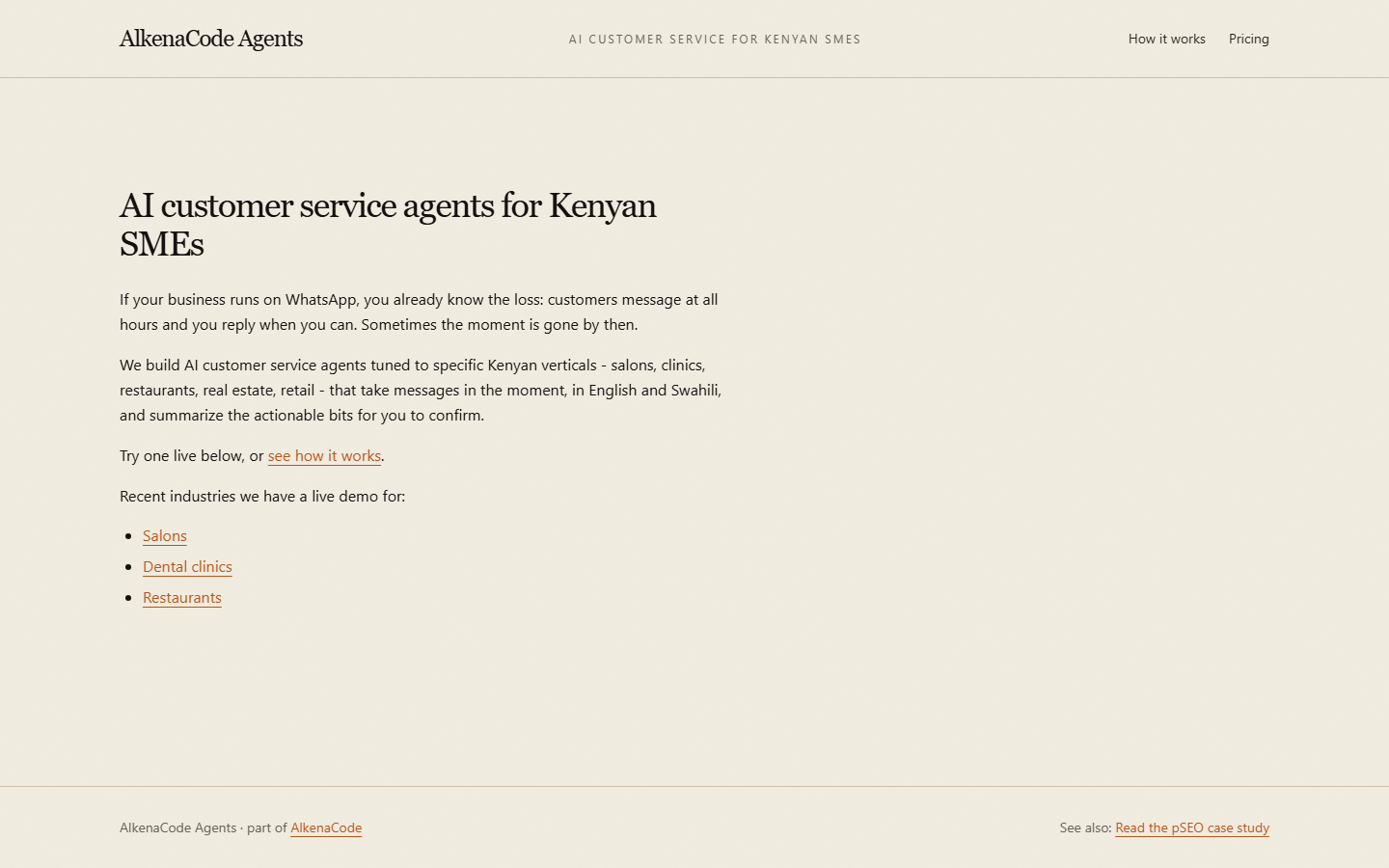
The same engine reuses templates per vertical to ship eight WhatsApp receptionist demos for Kenyan SMEs on a single deploy. The verticals are not separate sites; they are eight slug subtrees produced by the same publish loop, with their own Handlebars partials and structured-data annotations.
The hidden ninety percent
Distribution as part of the product
The growth-worker is a separate service. It listens for publish:complete on Redis pub/sub, regenerates the sitemap, validates its integrity (no orphan slugs, no error-AI articles, no junk), and pings IndexNow. The same growth-worker pattern powers Shellwire's editorial pipeline ([[shellwire]] DISPATCH NO. 001) -- they share the publish-and-distribute contract.
In production
- 01Two live deployments: myphotoai.alkenacode.dev (open case study) and agents.alkenacode.dev (commercial wedge into Kenyan SMEs, eight verticals).
- 02Per-vertical isolation is one template directory plus one slug strategy function. Adding a ninth vertical to AlkenaCode Agents is a config commit, not a project.
- 03Sitemap integrity has caught and stripped broken editions on every deploy since the pattern was extracted -- zero broken slugs reached Google.
- 04IndexNow lag from publish to first impression is measured in hours, not days, on both sites.
- 05The architecture is the cost control. No paid SEO tooling, no paid backlink-discovery service, no separate CMS to maintain.
The website is the publication. The publication is the lead-gen. Distribution belongs in the same commit as the feature.
A2UI free
A free-tier deployment of Google's agent UI protocol, running on 92 live LLMs nobody pays for.